

Ballooning Society of Pikes Peak
  • Our Club
    • Become a Member
    • Crewing for a Balloon
    • Gallery
    • Activities
  • Balloon Events
  • Our Pilots
  • Training
  • Resources
    • Balloon Federation of America
    • Class C LOA for KCOS
      • Balloons in COS with signed LoA
    • Launch Sites
    • Weather Sites
      • BalloonCast
      • LTA Weather
    • Ballooning Articles
  • Contact Us
Montgolfier balloon launch

The History of Crewing

Skip Howes Ballooning Articles


Crewing has a long history in hot air ballooning

A BRIEF HISTORY OF CREWING

After you’ve been crewing for a few years, it’s easy to assume the way you do it is how it’s always been done. Nothing could be less true. For 225+ years, crew have quietly yet tirelessly done whatever their era has required to keep their pilots and sport alive, and that “whatever” has evolved dramatically in the past 50 years alone. Taking a larger look at where we’ve come from can offer some perspective of our heritage, how the “modern” era came about, and where the future may lie. And sometimes the only way to take a step forward is by first taking a step back.

From day one in France, nearly all flights were experimental, military, or scientific in nature. Crew for the Montgolfiers’ famous flight rode horseback and were unsure even if their passengers would be alive on landing (no one knew if there was air above the ground, much less if it could sustain life). Arriving late after a rough landing, they found the rooster with a broken beak and the sheep with an injured hoof. Peasants responded to this never-seen devil-sent creation with fear and pitchforks, and balloonists quickly established a champagne tradition to protect life and property. For the next 180 years, crew input was largely physical and pre-launch in this non-sport.

Flash forward to the 1960s when Ed Yost brought the fledgling era of sport ballooning to the masses. Absent were powered fans, crown lines, and tie-offs. “Flap” inflations (as long and physical as they sound), ground handling nightmares, and running take-offs were routine. Despite onboard liquid fuel and underpowered burners, pilots would preheat envelopes with a portable “weed wand.” Flights were loosely organized with little routine with crew focused on pre-flight physical tasks. So began the era of “chasing.”

By the mid-1980s, ballooning and crewing began maturing. Powered fans and lift-gates cut out the majority of physical work required. Velcro-tabbed parachutes replaced Velcro-stripped tops, made pre-flight prep simpler and quicker, and gave pilots more handling/landing options. Tie-offs, crown lines, and tether systems brought much-needed ground control. Larger ride balloons and special shapes entered the scene. Radios made air-to-ground communication more common. Festivals with dozens or even hundreds of balloons appeared annually  nationwide. No one was quite sure how many crew a flight required, and crew size began growing. Crew driving pick-ups and vans for several thousands pilots nationwide filled a still-vague but essential role in flying, and “crewing” became established as a separate identity within the “balloonist” label.

Today’s crew role has grown in reach and responsibility and even evolved toward virtual co-piloting. Sharper yet broader pre-flight, in-flight, and landing routines better define crewing roles. Passenger waivers, briefings, and weather forecasts are no longer exclusively pilot domain. Many competition or commercial crew chiefs complete set-ups, cold inflations, or even hot inflations for their pilots – and then do it all in reverse on landing. Vans, SUV’s, and RV’s house dizzying arrays of tech: cell phones with internet/camera capability, laptops with real-time weather radar, and flight tracking with onboard GPS and navigation systems. No serious competition, corporate, or ride pilot can make it without an equally committed and skilled crew chief/program manager. A century ago, flight paths were great unknowns; today’s best pilots regularly score within feet or inches from miles out or fly through invisible boxes in the sky. Corporate sponsors want media-savvy crew and logo-wrapped vans creating brand awareness to festival audiences of millions – and virtual audiences with no delay for editing. Thousands of crew – but often only one or two per flight - have helped bring pure flight to the masses; over 200,000 passengers fly safely each year in the US alone. At many times, pilot and crew roles seem indistinguishable.   

A precise future of crewing isn’t clear, but trends driving its accelerating evolution are. While there’s no substitute for muscle, crew increasingly leverage brains over brawn and do more with less, more precisely, and faster. A decade ago, six crew would fight to safely ground handle a 105 in 10-12 knots; today, a skilled crew chief can routinely achieve this alone using various crown line techniques. Plotting flight paths – even without electronics – means crew can offer landing assistance to greatly enhance flight safety. Crewing in the future will require more skill and understanding of equipment, flight environment, technology, and human behavior than ever before or imagined.

Some aspects of crewing, however, have not evolved as fast or at all. Crew haven’t received federal recognition – nor should they - because we are not onboard the balloon, and that’s fine. Our sport, however, has yet to standardize or even legitimize crew roles and skills in any way. The name “chase crew” still connotes passively following during a flight rather than actively and proactively assisting. Mis-prioritized electronics - useful though not necessary - have become distracting.  Balloons are not IFR aircraft, and while it’s great you know within 3’ where on earth you are, the sad fact is most crew can’t save their pilot’s/passengers’ lives when they hit the power line across the street. Crew input remains mostly pre-flight when five decades of data show 80% of accidents and injuries occur on landing where crew have no expected role or task. No more decades of wallowing; it’s time to choose a new crew role which protects passengers on landing over a cherished tradition of “chasing” behind the balloon. Sometimes letting go is the best way to get a grip.

Auto racing has successfully used this evolutionary challenge to its advantage by embracing it. Compare footage of Indy or NASCAR races from 25 years ago to those from this summer. Sure, the victory goes to the driver, but races are won or lost where? In the pits. Who’s in the pits? CREW! Both leagues have strict protocol for all crew members. Crew chiefs with numerous real-time data feeds strategize, make tactical decisions, and coordinate entire teams. Crew members have roles and tasks they specifically train for. Remote spotters guide drivers through traffic and wrecks for safety and rankings, and such messages are considered essential guidance instead of challenges to authority. Radios keep everyone on the same page. Networks film, time, and broadcast crew performance as race developments. Teams review their performances. Crews train and compete with each other between races to continually improve everyone’s game. Auto racing gets it, and the whole sport has risen by its recognition of their crews’ essential roles.

As you drive up to your launch site on your next flight, take a moment to consider where ballooning has been and how your role has evolved. You are the modern generation of a 225-year plus tradition that has helped shape our sport and world. More than 20,000 crew nationwide and 100,000 worldwide share your passion and commitment to flying.  Your equipment and techniques are legacies from thousands of balloonists entrusted to you for both preservation and improvement. Your crewing contributions reach far beyond the safety, commercial, and entertainment values of your next flight; they truly touch the future. Ballooning needs your best efforts as key part of the sport to survive and thrive for the next 225 years. Neither a pilot’s certificate nor a balloon is required to make this sport better (I have neither). All it takes is the burning desire to leave something better than you found it. No contribution is too small; start thinking how you can make your crewing, flights, and this sport better!

Based on the book “Hot Air Balloon Crewing Essentials” available through the author Gordon Schwontkowski
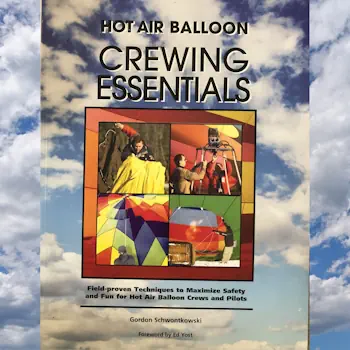



Crewing Essentials - Gordon Schwontkowski

Welcome to Crew Chief's Corner

Skip Howes Ballooning Articles

Hot Air Ballooning Can be fun and you could become  a "Crew Chief"

Gordon Schwontskoski is an experienced Crew Chief with decades of experience in recreational and Commercial Balloon Flights.  He has been a speaker at National and Local Safety Seminars, published articles for the BFA and is an expert on Hot Air Ballon Safery.  He has graciously given BSOPP permission to publish these articles for the benefit of the hot air ballooning community.  His articles are copyright 2011.

Safe ballooning is simply more fun, and our club has joined every other US ballooning club in the first-ever nationwide ground school to promote that end. The goal is to get crew chiefs and crew to higher and more uniform standards of knowledge and skill nationwide and to reduce flying risk to near zero as fast as possible. More brains, less brawn, safer fun more often!

Crew Chief's Corner is for all balloonists. Pilots will find information on flying and skill instruction their instructors never provided. Crew chiefs will find in-depth analysis of their role never discussed before. And crew will find what to expect and what is expected of them as their ballooning experience grows. Regardless of your ballooning rank, you’ll find a wealth of safety techniques and tips found nowhere else in our sport.

These 52 articles take an honest and thorough look at the mechanics, dynamics, realities, and legalities of crewing. They’re not the only or final word on crewing safety – just the first in ongoing discussion and training among you, your pilot, and crew. The key to safety is adapting fundamentals you find here to your equipment, region, flying style, and needs. Crewing is evolving faster than ever before, and the basics have never been as important as they are now!

A word of caution for readers: this is not the passive follow-behind “chasing” of the 1980s. Those days are over. Trouble develops when safety demands and skills/expectations are mismatched. Today’s flying demands informed, skilled, and proactive crew. You’ll learn to understand and manage weather, emergencies, high-wind ground handling, and landing safety like a pilot (while acting as crew) for one simple reason: you serve as your pilot’s only redundancy. Skilled, knowledgeable, and proactive crew are often the missing ingredient in safety. A full list of article topics appears below:

1.   Welcome to Crew Chief’s Corner!          2.   A Brief History of Crewing                        3.   Safety Versus Command                                     4.   Finding Great Crew

5.   Crew Chief Training and Proficiency       6.   Healthy Crew Dynamics                           7.   Common Crew Mistakes and Misperceptions   

8.   The Golden Rule and 10 Commandments    9.   Dressing the Part                              10. FAQs – Frequently Answered Questions             11. Emergency Contacts

12. First Aid and Injury Prevention                   13. Equipment Care and Handling           14. Lift Gates and Lifting                                           15. Rope and Line Safety

16. Legalities and Realities of Crewing             17. Driving Safety and Vehicle Handling   18. Navigation                                                         19. Weather Savvy

20. When Things Go Really Wrong                   21. Preventing and Managing Power Line Strikes      22. Crew Briefings                               23. Passenger Briefings

24. Radio Communication                                25. Tie Offs and Tying Off                           26. Layout to Launch                                             27. Fan Tips

28. Crown Line Command                                29. In-Flight Management                          30. Being There on Landing                                31.There on Landing – Now What?

32. Drop Lines                                                       33. Farm Landings                                       34. Unloading Passengers                                     35. Packing Up Fast and Easy  

36. Landowner Relations                                  37. Handling Hostile Landowners             38. Beware of Man’s Best Friend                           39. Propane and Refueling Safety

40. Flight Reviews                                            41. Cold Weather Crewing                           42. Crewing with Children                                    43. Professionalism

44. Tethers                                                         45. Festival Crewing                                     46. Plan B’s                                                           47. Commercial Crewing

48. Competition Crewing                                49. Special Shape Crewing                           50. Media Management                                      51. Beating Crew Complacency

52. Making It All Happen

What you’ll read is field-tested and proven. I’ve served as crew chief on 2000+ flights since 1982, closely studied 100,000+ more, and worked with 10,000+ crew nationwide. My book “Hot Air Balloon Crewing Essentials” and “Crew Zone” column in Ballooning Magazine address crewing topics in even greater detail. Hundreds of pilots and crew nationwide have agreed this is the most valuable hands-on material of any sort they gain from safety seminars. I’m not the nation’s most experienced crew chief by any stretch, just the one most willing to lead the charge for ballooning safety. That said, you won’t ever see the word “I” in these articles; they’re more about your future safety than my ballooning past. Hopefully, this series will start discussions and create a forum to pull out even better crewing ideas and techniques.

What’s in it for you? Pilots and crew who’ve taken tips from my articles, book, and seminars use them on their very next flight. Reported benefits include less equipment damage and repair cost, smoother inflations in any weather, fewer emergencies, easier navigation, safer landings, and faster pack-ups. Performance, communication, morale and loyalty all drastically improve. More safety, skill, fun, and profit with less risk, time, effort, and hassle – what more could any balloonist ask for?

How each club runs these articles – sequentially in newsletters or as a web archive – will vary. Exactly how and how fast your pilot, crew chief, and crew use them is up to you – just apply what you learn. However you access them, thank your club officers for joining this unprecedented safety program which can help unify and grow our sport. My best wishes to you for flights filled with safe fun, adventure, friends, and lifelong memories!

Safe Flights and Soft Landings,Gordon Schwontkowski    

Disclaimer: The information presented in these articles is for educational purposes, may not reflect the opinion of the newsletter publisher, and should be placed in context with personal experience and other authoritative sources. The author and publisher specifically disclaim any responsibility for any liability, loss, damage, or risk, personal or otherwise, which is incurred or alleged to have occurred as a consequence, directly or indirectly, of the use and application of any of the contents in this series.

 FOR FURTHER INFORMATION ON CREWING:

Additional articles and updates for this article series may be sent to your club and occasionally interrupt numbered article sequencing.

Safety seminar presentations on crewing by Gordon Schwontkowski are available. Top-rated topics include Crew Proficiency, Accident-Prevention Crewing, Tie-Offs/Tethers/Take-Offs, Weather Savvy, Being There on Landing, Landowner Relations, and others. Contact for availability.

HOT AIR BALLOON CREWING ESSENTIALS - the foundation book for these articles - is now available to every balloonist in the country!  Decades of knowledge, skills, and hard-earned lessons with in-depth looks at 30 aspects of crewing from set-up to pack-up – weather, emergencies, ground handling, landing, landowner relations, competition, tethering, media management, and more – pack its 200+ pages. Learn field-tested and proven strategies the pros use to get results - more safety and fun with less risk, time, and effort. Pilots and crew of all experience levels will find this how-to reference book invaluable. Clubs, commercial operators, competition pilots, weather briefers, and crew nationwide endorse this book as did Ed Yost (who provided its foreword). You simply can’t make a better investment in yourself, your sport, or its safety than with this expanded second edition.

The perfect item for crew training, flight schools, festival pilot gifts, club meetings, and safety seminars!

Individuals, clubs, flight schools, and others can order books at any time.  Reach out to Gordon Schwontkowski, 82 Silver Tree Circle, Cary, IL 60013.  ALso Check BFA.net fo his books as well.

 
Image

Mailing Address

BSOPP, C/O Stephen Blucher

4544 Valencia Circle

Colorado Springs, CO 80917

Follow Us On Facebook

facebook


© 2026 Ballooning Society of Pikes Peak - All Rights Reserved.

Design & Hosting By Guardian Solutions LLC

Ballooning Society of Pikes Peak
Sign In
  • Our Club
    • Become a Member
    • Crewing for a Balloon
    • Gallery
    • Activities
  • Balloon Events
  • Our Pilots
  • Training
  • Resources
    • Balloon Federation of America
    • Class C LOA for KCOS
      • Balloons in COS with signed LoA
    • Launch Sites
    • Weather Sites
      • BalloonCast
      • LTA Weather
    • Ballooning Articles
  • Contact Us